


Member Countries

ecocci
Iran, Pakistan chambers of commerce sign cooperation pact to boost bilateral trade
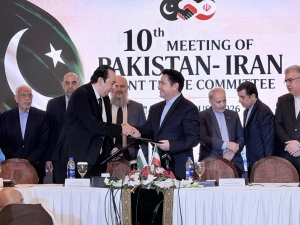
The agreement was signed during the closing ceremony of the Iran-Pakistan Joint Committee meeting, held over Tuesday and Wednesday in Islamabad, by Hossein Pirmoazzen, vice president of the Iran Chamber of Commerce, and Atif Ikram Sheikh, president of the FPCCI. Under the memorandum, the two chambers agreed to work together on behalf of the private sectors of Iran and Pakistan to advocate for policies that facilitate bilateral commerce, remove trade barriers and promote the development of infrastructure at border crossings and customs facilities. The agreement also envisages closer coordination between the two chambers in pursuing practical measures to improve cross-border trade and expand economic cooperation between businesses in both countries. The signing ceremony was attended by members of the Iranian trade delegation and Pakistani business representatives, concluding a series of meetings focused on strengthening commercial ties and increasing private-sector engagement between the two countries.
Iran chamber chief urges performance review of Islamic Chamber
Speaking at the 40th Board of Directors meeting of the Islamic Chamber in Ankara, Hassanzadeh proposed that the next session include a detailed report based on measurable indicators to improve transparency and accountability and help members make decisions grounded in actual performance. He also urged broader participation from different regions of the Islamic world in the chamber’s management, suggesting that the General Assembly be given the authority to increase the number of vice presidents when needed, noting that the chamber’s statutes do not set a limit on the number of vice presidents. Hassanzadeh said the proposal would enhance flexibility, strengthen geographic representation and improve the distribution of responsibilities without requiring amendments to the chamber’s statutes.
Iran Chamber chief sees scope to expand trade with Turkey beyond $30 billion goal
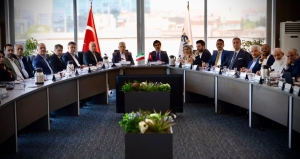
Samad Hassanzadeh told a meeting with executives of Turkey’s Independent Industrialists’ and Businessmen’s Association (MUSIAD) in Istanbul that Turkey ranked among Iran’s top three trading partners. He welcomed investment by Turkish technology and knowledge-based companies in Iran’s copper and other mineral resources, saying the two countries had strong potential to deepen bilateral trade, jointly develop projects and expand economic cooperation in third-country markets. Hassanzadeh said stronger trade ties could help promote regional stability, adding that borders should become gateways for commerce and economic growth rather than confrontation. Mehrdad Saadat, head of the Iran-Turkey Joint Chamber of Commerce, said greater practical trust by both governments in the private sector would create a golden opportunity to strengthen economic relations between the neighboring countries. MUSIAD Deputy Chairman Fahrettin Oylum said the Turkish business association had around 14,000 members, maintained branches in every province of Turkey as well as offices in Austria, Newcastle and several other European cities, and sought to expand mutually beneficial economic cooperation with partner countries.
Iran Chamber chief calls for stronger economic diplomacy in talks with Turkish lawmakers
Meeting the head of the Turkey-Iran Parliamentary Friendship Group and a delegation of Turkish lawmakers, Hassanzadeh said economic, social and cultural cooperation among countries should be strengthened to prevent disputes from escalating into wars, adding that economic diplomacy should be placed at the service of peace initiatives. Despite years of sanctions, Hassanzadeh said Iran had developed significant capabilities in petrochemicals, oil refining, modern agriculture, medicine, pharmaceuticals, artificial intelligence and the digital economy, creating opportunities for joint investment with Turkey. Hassanzadeh also welcomed the Turkish parliamentary delegation’s stated readiness to participate in Iran’s reconstruction efforts following the recent US-Israeli-imposed war on Iran, describing the proposal as reflecting the goodwill and cultural affinity of the Turkish people toward Iran. Iran’s ambassador to Turkey, Mohammad Hassan Habibollahzadeh, told the meeting that Turkey was one of Iran’s two most important neighboring countries, describing bilateral relations as broad and multifaceted across political, economic, social and cultural fields. He said Turkey was currently Iran’s third-largest trading partner and could rise to second place this year. Habibollahzadeh added that Iran and Turkey share three border crossings and that a fourth crossing could become operational this year with the cooperation of Turkish authorities. The ambassador also highlighted the two countries’ transit links, saying more than 250,000 trucks cross the Iran-Turkey border annually, and said both governments were committed to expanding bilateral cooperation, supported by political will and guidance from the two countries’ presidents.
Iran Chamber vice president calls for free trade deal with Turkey to boost bilateral commerce
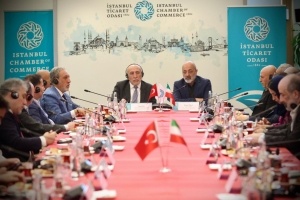
Qadir Qiafeh made the remarks during a meeting on Tuesday with the board of the Istanbul Chamber of Commerce, arguing that preferential trade arrangements had become outdated and should give way to a comprehensive free trade framework. “Iran and Turkey are two nations with deep cultural and economic ties,” Qiafeh said, adding that closer cooperation between the neighboring countries was “not a choice but an unavoidable necessity.” He said Iran’s geopolitical and geoeconomic position, abundant natural resources, industrial capacity and skilled workforce made it a strategic economic partner for Turkey. Qiafeh noted that the leaders of the two countries had previously set a target of increasing bilateral trade to $30 billion within five years, describing that goal as achievable. He said the next step should be to raise the target to $50 billion. He also urged the two sides to revise the preferential trade agreement signed in 2015 as a precursor to establishing a free trade regime between Iran and Turkey.
Iran Chamber, Pakistan embassy seek closer trade cooperation
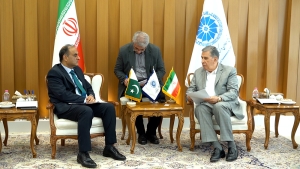
During a Sunday meeting with Pakistan’s Ambassador to Tehran, Imran Ahmed Siddiqui, Iran Chamber of Commerce President Samad Hassanzadeh said connecting the two countries’ economic capacities for the benefit of bilateral trade remained a key priority for the chamber. He said embassies play a central role in facilitating cooperation between the private sector and government agencies, removing obstacles and helping create the conditions needed to expand trade and investment. Hassanzadeh said cooperation between the Iran Chamber and the Pakistani embassy in Tehran could help strengthen relations in energy, petrochemicals, food industries, transit and other sectors, adding that such efforts should be actively pursued. He also highlighted obstacles slowing bilateral commerce, including the lack of efficient financial mechanisms, standards and quarantine issues, and prolonged delays affecting containers at Pakistan’s Karachi port. He said lengthy customs clearance times, combined with rail and road transport constraints, had imposed financial losses on Iranian businesses. Hassanzadeh proposed establishing a cross-border “green corridor” supported by electronic document transfers to facilitate trade. The Pakistani ambassador, for his part, said both sides were committed to removing obstacles and implementing previously agreed measures. He said extending border operations to 24 hours a day, seven days a week could provide greater opportunities for private-sector cooperation. Siddiqui also called for closer coordination between the Iran Chamber and the embassy’s economic section, adding that resolving issues such as banking links and transit required time and measures beyond the authority of embassies or even governments. He said Pakistan had proposed a barter mechanism and was awaiting Iran’s response on its implementation.
Iran, Turkey set $30 billion trade goal despite hurdles
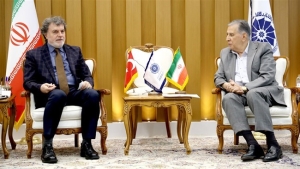
Iran and Turkey should expand their trade volume to $30 billion, the president of Iran Chamber of Commerce said on Sunday, citing close ties and significant opportunities for industrial and commercial cooperation between the two neighbors.
Speaking at a meeting with Turkish Ambassador Hicabi Kirlangiç, Samad Hassanzadeh condemned the recent US-Israeli military aggression against Iran, saying the attacks had caused extensive damage not only to the country and the region but also to the global economy.
Hassanzadeh pointed to logistical challenges in the Strait of Hormuz, noting that Turkey could serve as a suitable transit route.
However, he added that problems remain at the Bazargan border crossing and called for greater customs cooperation. “Iran is ready to transfer 500 trucks per day through customs, but Turkey only permits the passage of 200 trucks,” he said.
Hassanzadeh also highlighted the potential for joint cooperation in petrochemicals, food industries – particularly greenhouse products – as well as pharmaceuticals and medical equipment.
He called on the Turkish government to provide more support, especially in money transfers, and urged Turkish banks to facilitate the opening of accounts for Iranian traders and provide special access facilities.
Ambassador Kirlangiç said US and Israeli attacks on Iran were illegal and a clear violation of international law, expressing hope that negotiations would yield good results in Iran’s interest.
He added that bilateral trade had previously reached $22 billion before sanctions were imposed on Iran. “Therefore, reaching the target of $30 billion in trade between the two countries is not difficult,” he said.
ECO‑Region & Related Exhibitions – Exhibitor Information 2026
Eco Expo Central Asia 2026 – Samarkand, Uzbekistan
Dates: 31 May – 2 June 2026
Venue: EXPO CENTER, Silk Road Samarkand, Uzbekistan
Organizer & Contact:
-
BUSINESS CONGRESS MANAGEMENT CORP LLC FE
-
Email: This email address is being protected from spambots. You need JavaScript enabled to view it.
-
Phone: +998 94 990 37 95
Exhibitor Stand & Registration:
-
You must book a stand in advance by contacting the organizer.
-
Direct booking contact is available on the official site.
Opportunities:
✔ Standard booths and partnership/ad packages available.
✔ Advertising and visibility packages beyond booth space (brand highlights, sponsorship etc.).
Notes:
-
Detailed pricing is not published on the public site — interested companies must contact organizers directly for quotes and deadlines.
-
Early booking increases chances of choice locations and partnership options.
Regional Environmental Summit & Expo 2026 – Astana, Kazakhstan
Dates: 22–24 April 2026
Venue: International Exhibition Center “EXPO”, Astana
Event Focus:
Energy, water tech, circular economy, smart cities and climate technologies.
Participation:
-
Company booths and stand spaces available directly on the event site.
-
Official contact for booking a stand is listed by the organizers.
-
Over 200 exhibiting companies expected from ~30 countries.
Why important:
✔ Strong B2B and B2G networking with regional governments and investors.
✔ Useful for Iranian companies in sustainable technologies, energy, water systems, and smart infrastructure sectors.
Industrial & Central Asian Regional Trade Fairs (Example: INNOPROM‑style & others)
Although not ECO‑branded, industrial, technology or manufacturing expos in Central Asia / Eurasia attract companies from all ECO member states and often have structured exhibitor information:
Typical Terms (Based on similar trade fair models):
✔ Registration Fee: ~US$440 per exhibitor/co‑exhibitor.
✔ Minimum Booth Space: 9 m² standard.
✔ Service Pack Price: ~US$410/m² if paid before deadline (~31 Dec 2025), rising to ~US$460/m² after.
✔ Badges:
-
~1 badge per 5 m² space.
-
Extra badge ~US$35 each.
Example participation format from a Central Asia industrial trade fair:
-
Standard booth and bare space options.
-
Extra corner booth charges (~15%).
-
Option to participate in business programs and roundtables (fees vary).
Note: This pricing is representative and may vary by specific event or organizer — always confirm with organizers.
Major ECO & Regional Economic Events in 2026 (All Member Countries)
1. ECO CCI Executive & General Assembly Meetings
The Economic Cooperation Organization Chambers of Commerce and Industry (ECO CCI) holds annual executive meetings and assemblies for planning trade cooperation, harmonization of standards, and private sector integration across all member states.
-
These typically occur early in the year (January–February).
-
Focus: trade policy dialogue, membership coordination, and business matching across ECO countries.
(Formal schedules are published by ECO CCI events platform.)
Key purpose: Strengthening private sector cooperation and trade facilitation among all ECO members.
2. Eco Expo Central Asia 2026
- Samarkand, Uzbekistan
- 31 May – 2 June 2026
This will be one of the largest international expos in Central Asia — showcasing environmental technologies, sustainable innovation, and green business solutions, and drawing participants from across ECO member states and beyond.
Highlighted sectors include:
-
Green construction and sustainable infrastructure
-
Clean tech and eco‑innovation
-
Green transport and smart cities
-
Sustainable agriculture
-
Green finance and eco‑tourism
Trade relevance: While focused on environment and sustainability, this expo offers B2B, B2G networking and export opportunities for Iranian firms in technologies, machinery, energy, and environmental solutions, as well as services in the ECO region.
3. Regional Environmental Summit & Expo 2026 – Astana
- Astana, Kazakhstan
- 22–24 April 2026
Although broader in theme, this expo gathers government, business and innovation leaders from 30+ countries, including ECO members, around green technology, smart infrastructure, water and climate solutions.
Trade relevance:
-
B2B and B2G negotiations
-
Networking with international investors
-
Investment and export opportunities in sustainable technologies.
4. ECO Business Week & Eco Business Forums
Large, cross‑sectoral ECO business platforms that bring government officials, private sector leaders and chambers of commerce together, in formats such as:
-
ECO Business Week
-
ECO Business Forums
-
Sector‑specific B2B meetings
Example: The 6th ECO Business Forum held in Shusha, Azerbaijan (in 2025) highlighted trade, investment, and cooperation in food, agriculture, textiles, ICT, transport, tourism, and circular economy. These frameworks typically produce follow‑on initiatives influencing the 2026 agenda.
Key purpose: Strategic trade cooperation, export promotion and regional economic integration across ECO members.
5. ECO Ministerial & Sectoral Meetings (e.g., Tourism, Transport)
Networking and cooperative decision‑making events among ministers and delegates of all ECO member states focusing on sectors relevant to customs and trade logistics.
Example: The ECO Tourism Ministerial Meeting signals sectoral dialogue within ECO frameworks with potential indirect trade logistics impacts.
ECO Member Countries Involved
All events listed include participation (directly or indirectly) from ECO member countries:
- Iran
- Turkey
- Pakistan
- Azerbaijan
- Uzbekistan
- Kazakhstan
- Turkmenistan
- Afghanistan
- Kyrgyzstan
- Tajikistan
(Plus observer states and associate partners at larger forums.)
Why These 2026 Events Matter for Trade & Customs
Export Expansion
-
Platforms like Eco Expo Central Asia 2026 and ECO Business Forums provide Iranian exporters with direct access to buyers and partners across ECO markets — for industrial, tech, and green sector products.
Import & Supply Chain Insights
-
Exposure to regional suppliers and technologies facilitates import planning, tariff negotiations, and strategic sourcing for Iranian markets.
Networking & B2B Opportunities
-
Business matchmaking sessions, seminars, and official dialogues help customs authorities and trade delegations coordinate export documentation, logistics pathways, and regulatory frameworks.
Trade Policy & Facilitation
-
Meetings of ECO CCI and ministerial panels contribute to harmonizing trade procedures, easing cross‑border movement of goods, and aligning standards among member states.
Afghanistan urges major Iranian firms to step up investment
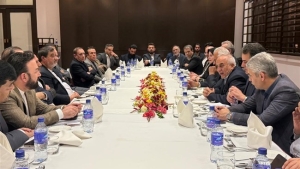
Afghanistan Chamber of Commerce and Investment has called on major Iranian companies to increase their presence in the country, saying Iran’s private sector is underrepresented compared with investors from other nations.
The appeal was made during a meeting between a visiting delegation from Iran Chamber of Commerce and the president of Afghanistan Chamber of Commerce and Investment in Kabul on Sunday.
The two sides reviewed three priority areas for bilateral cooperation – investment, exports and transport – noting that both countries have struggled to build steady, long-term partnerships in these sectors.
Afghan officials said foreign companies from several countries have already stepped up investment in Afghanistan, but Iran’s footprint remains limited.
Niloofar Asadi, Asia-Oceania director at the international affairs department of Iran Chamber of Commerce, said expanding ties with Afghanistan is a top priority and that Iran is drafting a roadmap aimed at raising the level of economic engagement.
She stressed the need to make better use of joint chambers and to strengthen participation in bilateral commissions to help remove legal barriers and support the development of essential infrastructure.