Member Countries
ecocci
Afghanistan urges major Iranian firms to step up investment
Afghanistan Chamber of Commerce and Investment has called on major Iranian companies to increase their presence in the country, saying Iran’s private sector is underrepresented compared with investors from other nations.
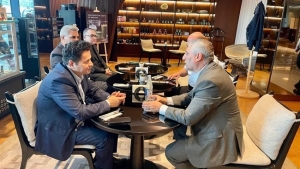
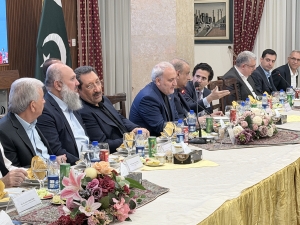
The appeal was made during a meeting between a visiting delegation from Iran Chamber of Commerce and the president of Afghanistan Chamber of Commerce and Investment in Kabul on Sunday.
The two sides reviewed three priority areas for bilateral cooperation – investment, exports and transport – noting that both countries have struggled to build steady, long-term partnerships in these sectors.
Afghan officials said foreign companies from several countries have already stepped up investment in Afghanistan, but Iran’s footprint remains limited.
Niloofar Asadi, Asia-Oceania director at the international affairs department of Iran Chamber of Commerce, said expanding ties with Afghanistan is a top priority and that Iran is drafting a roadmap aimed at raising the level of economic engagement.
She stressed the need to make better use of joint chambers and to strengthen participation in bilateral commissions to help remove legal barriers and support the development of essential infrastructure.
Iran chamber official sees promising trade outlook with Afghanistan
A senior Iranian business leader says trade prospects between Iran and Afghanistan are “bright and promising,” calling for faster progress on joint projects and improved border and financial infrastructure to deepen economic ties.
Speaking at a multilateral business forum held alongside the fourth Imam Abu Hanifa International Exhibition in Kabul on Wednesday, Qadir Qiafeh, vice-president of Iran Chamber of Commerce, said Afghanistan’s mineral wealth, fertile land, emerging industrial potential and young workforce complemented Iran’s advanced industrial base, technical expertise and access to global markets.
He said the Iranian chamber aims to play “a central and active role” in facilitating long-term partnerships between private-sector players in both countries.
Qiafeh outlined several priority steps to boost cooperation, starting with accelerating joint projects, particularly completion and operationalization of all phases of the Khaf-Herat railway, which he said would significantly increase bilateral trade capacity.
He also called for improved payment channels and resolution of banking issues, including blocked accounts, which continue to hinder transactions. Strengthening infrastructure at the Dogharoun border crossing and reducing delays at the frontier were essential for expanding trade, he added.
Qiafeh said Iran and Afghanistan could jointly develop agricultural supply and processing, noting Afghanistan’s water resources and production potential. He said part of Iran’s agricultural needs could be sourced from Afghanistan and, after processing, exported to international markets.
Iran Chamber chief calls for upgrade of Kazakhstan ties to strategic economic partnership
Iran Chamber of Commerce president says it is time for Tehran and Astana to move beyond traditional trade and pursue a strategic industrial and transit partnership, adding that the Iranian private sector was ready to turn negotiations into concrete projects and lasting regional cooperation.
Speaking at an Iran-Kazakhstan trade and economic seminar in Astana on Wednesday, Samad Hassanzadeh said Kazakhstan’s economy – with a GDP of more than $288 billion – makes it a key partner for Iran in Eurasia, though current trade levels fall far short of potential.
Hassanzadeh said removing existing barriers could lift trade to $3 billion and that the newly implemented Iran-Eurasia free trade agreement, which eliminates a large share of tariffs, will help cut transaction costs and open new routes. He said the deal offers Kazakhstan a “golden opportunity” to connect to Persian Gulf, South Asian, African and even European markets through Iran, while enabling Iran to become a distribution hub in Central Asia.
He outlined key proposals for deeper cooperation, including a joint Iran-Kazakhstan logistics terminal in southern Iranian ports, joint grain, meat and oil processing units, and a shared industrial zone in Iran’s free trade areas for exports to Eurasia.
He also called for a joint consortium to process Kazakh minerals in Iran for higher-value exports to third countries.
Hassanzadeh said the moment had come to elevate ties to a strategic economic, industrial and transit partnership, adding that Iran Chamber of Commerce stood ready to transform understandings into investments and long-term regional collaboration.
Iran, Kazakhstan private sectors sign nine cooperation documents
Private sector representatives from Iran and Kazakhstan signed nine cooperation documents during a visit by a large Iranian trade delegation to the Kazakh capital Astana.
A 100-member delegation from Iran Chamber of Commerce, Industries, Mines and Agriculture, led by its president Samad Hassanzadeh, returned to Tehran after the trip, which coincided with an official visit by President Masoud Pezeshkian to Kazakhstan.
During the visit, the Iranian chamber signed three memorandums of understanding with KazTrade, Kazakhstan’s Trade Development Council, and the National Chamber of Entrepreneurs of Kazakhstan, known as Atameken. The agreements focus on cooperation in exchanging trade information, facilitating the exchange of business delegations, logistics, and green transportation of goods.
Several Iranian companies also signed six cooperation agreements with their Kazakh counterparts in sectors including agricultural exports, mining, copper production and the food industry.
Iran chamber chief says bilateral trade with Kazakhstan could multiply with better infrastructure
Iran chamber of commerce president said on Thursday that bilateral trade with Kazakhstan, currently estimated at about $350 million, could rise several-fold in the short term if existing logistical and financial bottlenecks are addressed.
Speaking at the Iran-Kazakhstan Business Forum held in Astana and attended by the presidents of both countries, Samad Hassanzadeh said studies show that inadequate transport and logistics infrastructure, the absence of a joint bank and reliable financial mechanisms, and competition from regional products in Kazakhstan remain major obstacles.
“Removing these barriers requires joint planning, government support and the active involvement of the private sector,” he said.
Hassanzadeh highlighted the International North-South Transport Corridor (INSTC) as a key platform for cooperation, saying the route – which passes through Iran and connects to the port of Bandar Abbas – provides Kazakhstan and other CIS countries with access to the Persian Gulf and markets in South and East Asia.
He said expanding the corridor would cut transportation costs and play a vital role in strengthening regional food security, energy links and trade. “Completing the infrastructure of this corridor and resolving its operational challenges must be a priority in our joint cooperation,” he added.
Hassanzadeh said Kazakhstan is a top strategic partner for Iran due to geographical proximity, shared interests and its membership in the Eurasian Economic Union, and that Iran Chamber of Commerce stands ready to take practical steps to deepen economic ties.
Iran’s last year trade with ECO countries hits $27.6 billion
Iran’s trade with member states of the Economic Cooperation Organization (ECO) reached $27.6 billion in the past calendar year to late March with a total trade volume of 36.2 million tonnes, according to figures released by Iran’s Customs Administration.
Of this amount, exports accounted for 28 million tonnes valued at $14.08 billion, while imports totaled 8.2 million tonnes worth $13.54 billion.
Non-oil exports to ECO countries saw strong growth, rising 38.7% in volume and 37.5% in value year-on-year. Imports from ECO partners also increased, up 36% in volume and 54.5% in value compared to the previous year.
Turkey was the top destination for Iranian non-oil exports, receiving goods worth $6.89 billion. Other key markets included Pakistan ($2.42 billion), Afghanistan ($2.41 billion), Azerbaijan ($681 million), and Turkmenistan ($572 million).
On the import side, Turkey also led the list, exporting $12.47 billion worth of goods to Iran. Pakistan followed with $706 million, and Tajikistan with $93 million.
Iran, Uzbekistan seek to deepen trade ties as business delegation visits Tehran
The Iran Chamber of Commerce, Industries, Mines, and Agriculture hosted a high-level business delegation from Uzbekistan on Wednesday, led by Davron Vakhabov, president of the country’s Chamber of Commerce and Industry, as both nations seek to expand economic cooperation.
Qadir Qiafeh, Vice President of the Iran Chamber of Commerce, welcomed the Uzbek delegation and expressed optimism that recent positive developments in both countries could lead to enhanced collaboration in industrial, commercial, and technological sectors.
Highlighting Uzbekistan’s strong presence at the upcoming Iran Expo, Qiafeh said: “With 200 Uzbek companies participating, we will certainly organize a side event during Iran Expo to facilitate direct engagement between Iranian and Uzbek business representatives so they can identify potential partners.”
Vakhabov noted that trade ties between Iran and Uzbekistan have grown in recent years, though he stressed that the full potential of bilateral cooperation remains untapped.
“With stronger cooperation between our chambers of commerce and private sectors, and the resolution of trade barriers by our governments, we believe bilateral trade could reach $5 billion by 2028,” he said.
Vakhabov emphasized Uzbekistan’s strategic role as a hub for manufacturing and re-exporting finished goods to third countries, adding that raw materials from Iran could be vital to fueling this growth.
Mousa Aghaei, Chairman of the Iran-Uzbekistan Joint Chamber of Commerce, echoed the need to elevate bilateral trade volumes, saying current figures do not reflect the depth of historical, cultural, and economic ties between the two nations.
Aghaei also called on banks in both countries to draw on their experience and consult with traders to devise solutions for easing financial transactions. He noted that Uzbekistan's exports to Iran suffer from a lack of diversity and said the joint chamber is ready to help promote Uzbek capabilities in the Iranian market.
He concluded by urging Uzbekistan to ease its visa policy for Iranian nationals, stating that the ultimate goal should be full visa exemption.
Iran eyes multi-billion-dollar trade with Azerbaijan: Chamber of Commerce president
Iran aims to significantly boost trade with neighboring Azerbaijan in the coming years, building on a 2024 trade volume of around $900 million, the president of Iran Chamber of Commerce, Industries, Mines and Agriculture said at a bilateral business forum attended by the presidents of both countries.
Speaking at the Iran-Azerbaijan Business Forum in Baku on Monday, Samad Hassanzadeh expressed optimism about deepening economic ties between Tehran and Baku.
"Our goal is to increase the volume of trade to several billion dollars in the coming years," Hassanzadeh said. "This forum should mark a new chapter in strengthening our brotherly relations and expanding joint economic cooperation."
He said Iran’s private sector and business leaders were fully prepared to explore investment and joint production opportunities with Azerbaijani partners.
Hassanzadeh outlined key sectors for collaboration, highlighting transit and transport, particularly the completion of the Rasht–Astara railway—a missing link in the International North–South Transport Corridor (INSTC). The project would reduce shipment times between Asia and Europe and enhance both countries' roles in the global supply chain, he said.
In the energy sector, he pointed to recent tripartite gas swap agreements between Iran, Azerbaijan and Turkmenistan, which have laid the groundwork for expanded cooperation in electricity and gas trade. Joint investments in cross-border energy infrastructure and power plant projects were described as unprecedented opportunities.
Hassanzadeh also emphasized collaboration in agriculture and food industries, including smart farming technologies, greenhouse production, modern irrigation, and exports of processed agricultural products.
Following Azerbaijan’s reclaiming of its territories, he said Iranian firms could play a major role in reconstruction, including in road building, dam construction, electrification, and building hospitals and schools.
Hassanzadeh also identified tourism – especially health, religious, and eco-tourism – as another promising area, citing eased visa regulations and cultural affinity. He added that joint Iran-Azerbaijan tour packages targeting third-country tourists were also under consideration.
To overcome current barriers, Hassanzadeh proposed several measures, including easing visa issuance for business travelers, increasing economic representation offices, resolving banking and payment challenges using national currencies, improving freight movement, and negotiating a free or preferential trade agreement to reduce customs tariffs.
He concluded by expressing hope that the forum would usher in a “remarkable leap” in bilateral trade and investment between the two nations.
Iran, Afghanistan hold business forum in Tehran
An Iran-Afghanistan Business Forum was held in Tehran on April 28, 2025. The forum was participated by Afghanistan’s delegation of business operators to the 7th Exports Potential Exhibition of the Islamic Republic of Iran (Iran Expo 2025).
Iran urges stronger trade ties with Turkmenistan amid Iran Expo 2025
A senior Iranian business official has called for intensified trade relations between Iran and Turkmenistan, highlighting the mismatch between the current trade volume and the countries' historical and economic potential.
Speaking at the Iran-Turkmenistan Business Forum held during the Iran Expo 2025 in Tehran, Payam Bagheri, Vice President of the Iran Chamber of Commerce, Industries, Mines, and Agriculture, stressed the importance of expanding economic cooperation.
“Despite deep-rooted historical, cultural, and economic ties, the current level of trade does not reflect the existing capacities,” Bagheri said. “More effective steps must be taken to enhance bilateral engagement.”
He urged joint chambers and business associations to play a more active role in aligning supply and demand and facilitating commercial exchanges between the two countries.
Bagheri also described the Iran Expo 2025 as a "golden opportunity" to showcase the country’s economic capabilities. He noted that over 3,000 business representatives from 110 countries were participating in the event, with the Iranian chamber working at full capacity to leverage the occasion.
Ramazan Bahrami, Chairman of the Iran-Turkmenistan Joint Chamber of Commerce, echoed the optimistic tone, stating that 2024 was a successful year for bilateral trade. “We anticipate that 2025 will mark the beginning of a new chapter in economic cooperation between our two nations,” he said.